
CORE INSIGHT™
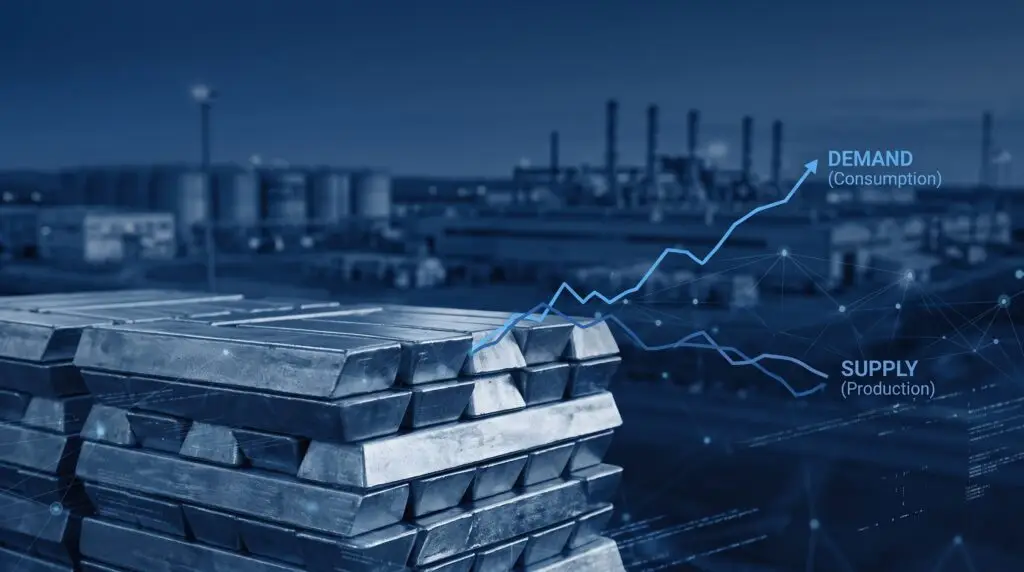
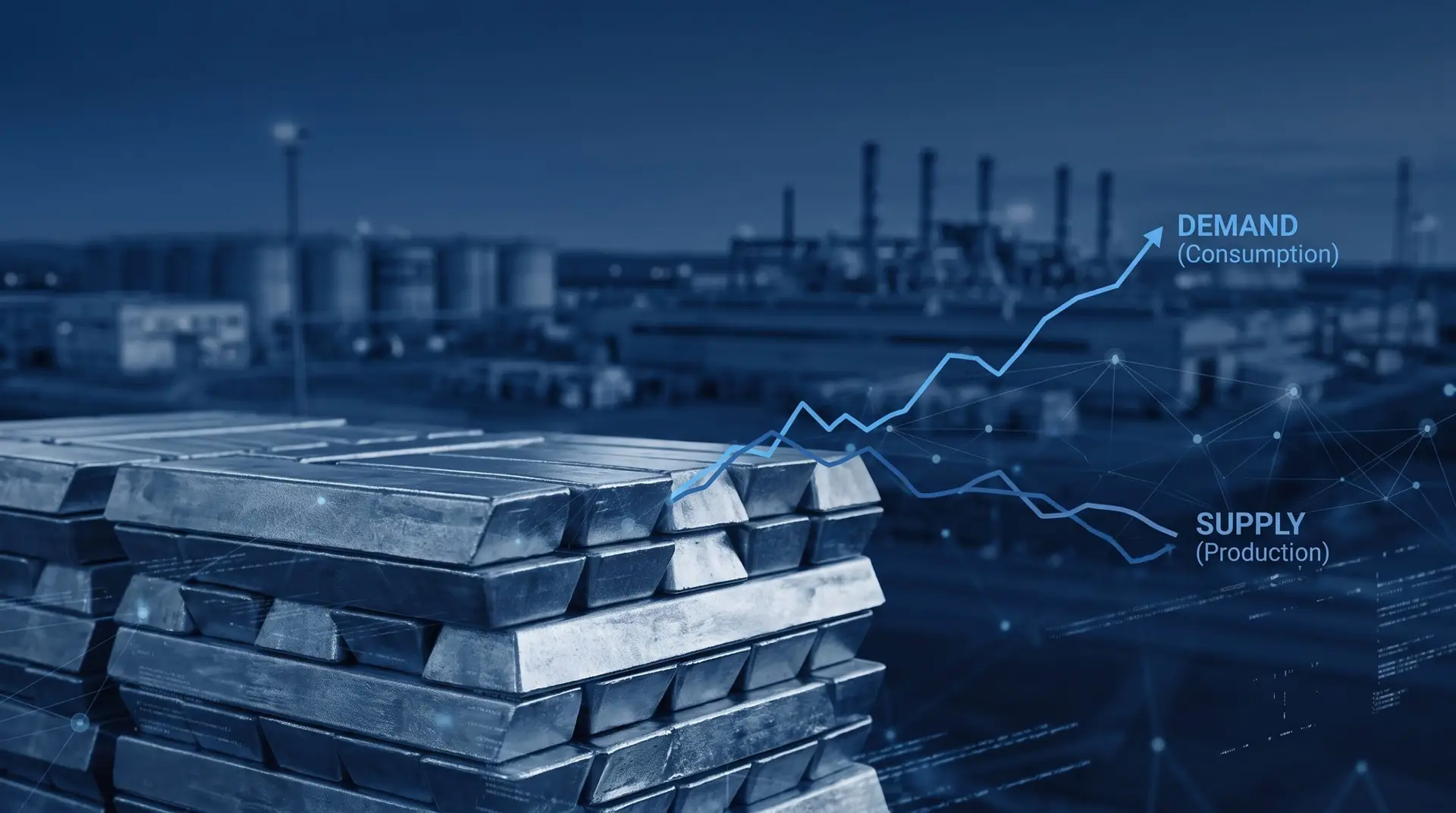
Aluminum market news usually reports one side of the market at a time — demand is strong, or production is falling. The most revealing moment is when the two move in opposite directions. When manufacturing demand improves across several regions while primary production is constrained, the balance between buyers and available metal begins to change. That divergence does not by itself determine where prices go, but it changes the set of signals worth watching: persistence, breadth, and the speed of the supply response.
Why does most aluminum market news miss the real signal?
Aluminum headlines tend to isolate a single variable. A manufacturing index rises; a smelter curtails; a region’s imports fall. Each is reported as its own story. But the aluminum market is a balance, and a balance is only informative when both sides are read together.
Rising demand alongside rising production can leave conditions roughly stable. Falling demand alongside falling production can offset. Neither combination changes much on its own. The market becomes worth watching closely when the two sides stop moving together.
Key takeaway: Demand or supply in isolation tells you about one side of the market. Divergence between them tells you the market’s structure is changing.
What does broadening aluminum demand look like?
Demand becomes structurally meaningful when improvement is visible across several regions and end-use sectors at once, rather than concentrated in one place.
The signs of broadening demand:
- Manufacturing activity expanding in more than one major consuming region
- Multiple end-use sectors — transport, construction, packaging, electrical — improving together
- Purchasing behavior normalizing after a cautious period, as buyers rebuild inventories
- More consistent offtake replacing hand-to-mouth buying
Not every sector or geography moves at the same speed. The point is that demand is no longer supported by a single isolated source of strength. That makes it more durable, and it adds pressure to physical market conditions as buyers secure material more consistently.
Why does aluminum supply respond more slowly than demand?
Primary aluminum production cannot flex quickly. Smelting is capital-intensive, energy-intensive and slow to restart:
- Restarting curtailed capacity takes months and significant cost
- Restoring operating rates after a disruption is gradual
- Rebuilding supply chains — alumina, power contracts, logistics — takes longer than the disruption itself
- New capacity requires years of planning, permitting and construction
An improvement in demand therefore does not produce an equally rapid increase in available metal. When production is constrained by energy costs, disruptions or curtailments, the lag between a demand recovery and a supply response can extend for quarters.
How do you read a demand–supply divergence?
The useful framework compares the direction of each side and what the combination implies:
| Demand | Primary supply | What it suggests | Watch closely? |
|---|---|---|---|
| Rising | Rising | Roughly balanced growth | Less urgent |
| Falling | Falling | Offsetting weakness | Less urgent |
| Rising | Flat or falling | Balance tightening; availability matters more | Yes |
| Falling | Rising | Balance loosening; inventories build | Yes |
The third row is the divergence that draws the most attention. When consumption improves while production contracts or recovers slowly, the relationship between buyers and available metal shifts. That does not automatically determine price direction — but it changes what market participants should monitor.
The important question stops being whether demand is growing or whether production is falling individually. It becomes whether the gap between the two keeps widening.
Key takeaway: A widening gap between demand and supply changes the signals to watch before it changes the price.
What should market participants watch?
Three signals separate a meaningful divergence from a temporary one:
- Persistence. A short-lived improvement in manufacturing activity may not change market conditions, just as a brief production disruption may resolve quickly. Several months of consistent data matter more than one print.
- Breadth. Demand improvement across multiple regions and end-use sectors is more meaningful than strength concentrated in one area.
- Speed of the supply response. If production remains constrained while demand keeps improving, physical availability — not just the benchmark price — becomes increasingly important.
Together, those signals give a more complete view than any single indicator.
Why does price lag the underlying market?
Price is the most visible expression of what is happening in aluminum, but it is usually the result of forces developing underneath it. Demand trends, production constraints, physical availability and buyer behavior all begin changing before their full implications appear in the quote.
Regional premiums, physical discounts, delivery lead times and inventory movements often register a shift in balance before the benchmark does. A consumer who cannot find prompt metal, or a trader watching warehouse stocks draw, is seeing the divergence in real time — weeks before it becomes a price story. Following aluminum market news for the price alone means seeing the outcome without the cause.
Who does this matter for?
- Procurement teams deciding whether to extend coverage as availability tightens
- Producers planning operating rates and restarts against demand signals
- Traders positioning ahead of changes in regional balances and premiums
- Aluminum consumers and finance teams whose cost exposure depends on the physical market, not only the benchmark
How HARBOR reads the aluminum market
HARBOR monitors aluminum demand, primary production, physical availability and market behavior across the global value chain. Its Aluminum Price Outlook connects those underlying signals to proprietary forecasts, scenario probabilities, projected balances and hedging conclusions. This article explains the divergence and why it matters; HARBOR’s view on price direction, timing and deficit magnitude is reserved for subscribers.
Frequently asked questions
What drives aluminum demand?
Aluminum demand follows manufacturing activity in transport, construction, packaging, electrical and consumer goods. Broad-based improvement in manufacturing across several regions is the strongest indicator of durable demand growth.
Why can’t aluminum production respond quickly to demand?
Smelting is energy-intensive and capital-intensive. Restarting curtailed capacity, restoring operating rates and rebuilding supply chains take months to years, so production lags changes in consumption.
What happens when aluminum demand exceeds supply?
The balance between buyers and available metal tightens. Physical availability becomes more important, inventories tend to draw, and regional premiums and lead times often react before the benchmark price fully reflects the change.
What is the difference between aluminum demand and consumption?
In practice the terms are used interchangeably: both refer to the volume of aluminum used by manufacturers and end markets over a period. Apparent consumption adds inventory changes to production plus net imports.
How do you know if a demand recovery is real?
Look for persistence over several months, breadth across regions and sectors, and normalizing purchasing behavior such as inventory rebuilding. A single strong data point is not a trend.
Why does the aluminum price lag market fundamentals?
Because price is the outcome of forces — demand, production, availability, buyer behavior — that shift before their full effect is transacted. Physical indicators like premiums and lead times usually move first.
Where can I follow aluminum market news that goes beyond the price?
Most coverage reports headline moves. HARBOR’s Aluminum Price Outlook tracks demand, production, availability and market behavior together, and connects them to forecasts and scenarios available to subscribers.
The question behind the headline
The more useful question is not simply whether aluminum prices are moving higher or lower. It is whether the structure of the market is changing before the price fully reflects it. A divergence between demand and supply is exactly that kind of change — and it is visible to anyone reading both sides of the market together.
Built for procurement teams, producers and traders who need to know what the divergence means for price, timing and balance, HARBOR’s Aluminum Price Outlook takes the analysis from signal to conclusion.